Introduction
You spend about a third of your life in bed. That's a lot of hours with your head on a pillow. And yet most people don't put much thought into their pillow — they just use whatever came with the bed set or grab one from the store without trying it.
But the wrong pillow can cause neck pain, headaches, poor sleep, and even wrinkles (yes, really). The right pillow keeps your neck aligned with your spine and supports your head in a neutral position.
Here's how to find the perfect pillow for how you sleep.
First, Figure Out Your Sleep Style
Most people fall into one of three categories:
Side Sleepers
You need a thicker, firmer pillow to fill the space between your ear and shoulder. Your neck should stay in line with your spine — not tilted up or down.
Ideal loft (thickness): Medium-high to high (4-6 inches compressed) Ideal firmness: Medium-firm to firm
Back Sleepers
You need a medium-thickness pillow that supports the natural curve of your neck. Too thick and your head tilts forward; too thin and your neck tilts back.
Ideal loft: Medium (3-4 inches compressed) Ideal firmness: Medium
Stomach Sleepers
You need the thinnest, softest pillow possible — or no pillow at all. Stomach sleeping already puts your neck in an awkward position; a thick pillow makes it worse.
Ideal loft: Low (1-2 inches compressed) Ideal firmness: Soft
Combination Sleepers
If you toss and turn between positions, look for a pillow with adjustable loft or a medium-profile pillow that works reasonably well for all positions.
Pillow Types Explained
Memory Foam
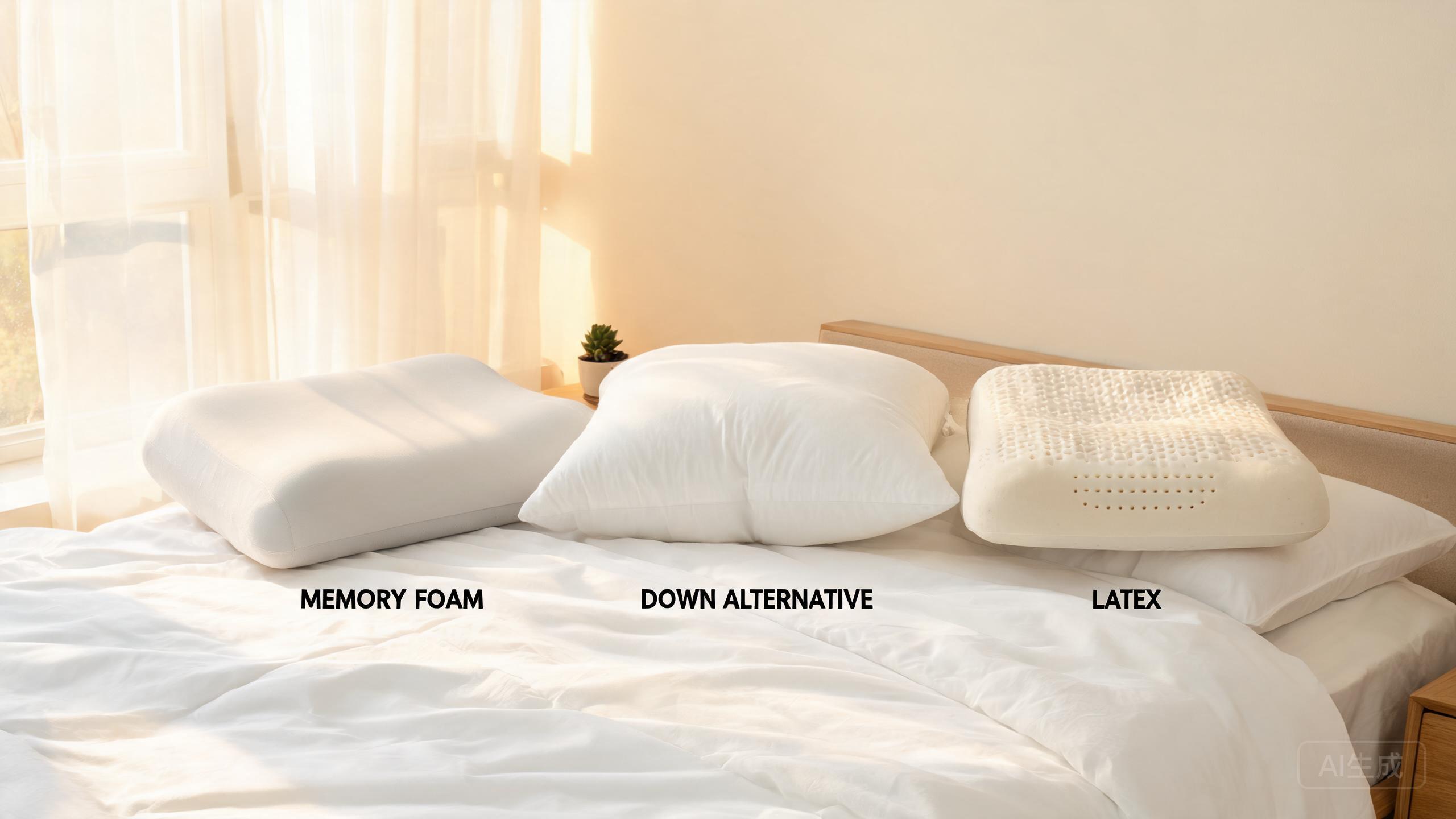
Memory foam molds to the shape of your head and neck, providing excellent support. It's durable and holds its shape well.
- Best for: Side and back sleepers, people with neck pain
- Pros: Great support, holds shape, good for neck pain
- Cons: Can sleep hot, off-gassing smell when new, heavy
Down / Feather
Down pillows are soft, fluffy, and moldable. You can scrunch them into whatever shape you want. They feel luxurious and sleep cool.
- Best for: Stomach and back sleepers, people who like soft pillows
- Pros: Soft, moldable, long-lasting (with proper care), sleeps cool
- Cons: Expensive, needs regular fluffing, not great for neck support, allergen concerns
Down Alternative
Down alternative pillows mimic the feel of down with synthetic fibers. They're cheaper and hypoallergenic, but they don't last as long.
- Best for: Budget shoppers, people with allergies
- Pros: Affordable, hypoallergenic, soft, machine-washable
- Cons: Flattens over time, not as durable as real down
Latex
Latex pillows are supportive yet springy. They hold their shape well and are naturally cooling and hypoallergenic.
- Best for: People who want support with bounce, hot sleepers
- Pros: Supportive, cool, durable, hypoallergenic
- Cons: Expensive, heavy, firm feel isn't for everyone
Buckwheat
Buckwheat pillows are filled with — you guessed it — buckwheat hulls. They're firm, moldable, and very supportive. They also sleep extremely cool.
- Best for: People who want firm support, hot sleepers
- Pros: Very supportive, moldable, sleeps cool, adjustable loft
- Cons: Heavy, noisy (crinkly sound), unusual feel, can be messy
Top Picks by Sleep Style
Side Sleepers: Coop Home Goods Eden
The Coop Home Goods Eden pillow is a shredded memory foam pillow that you can adjust by adding or removing fill. It's thick enough for side sleepers and supportive without being too hard. The gel-infused foam also sleeps cooler than regular memory foam.
Back Sleepers: Brooklinen Down Pillow (Mid-Plush)
Brooklinen's mid-plush down pillow is the perfect middle ground — soft enough to be comfortable, supportive enough to keep your neck aligned. The down is high-quality and fluffy, and it holds its shape well.
Stomach Sleepers: Bluewave Bedding Ultra Slim Gel Memory Foam
If you sleep on your stomach, you need a thin pillow. The Bluewave Ultra Slim is only 2.75 inches thick — about as thin as you can get while still having some support. The gel memory foam is supportive but soft.
Combination Sleepers: Layla Kapok Pillow
The Layla Kapok pillow is filled with a mix of memory foam and kapok fiber. It's soft yet supportive, and you can adjust the fill to get your perfect loft. It works well in any sleep position.
When to Replace Your Pillow
A good rule of thumb: replace your pillow every 1-2 years. Here's how to tell it's time:
- It's lumpy or flat
- You have to fluff it constantly
- You wake up with neck pain or headaches
- It smells (sweat, oils, dust mites accumulate over time)
- The "fold test": fold the pillow in half. If it doesn't spring back, it's done.
Pro Tips
- Try before you buy. Many online brands offer 100+ night trials. Take advantage of them.
- Use a pillow protector. It keeps sweat and oils off the pillow, extending its life.
- Wash your pillowcase weekly. Sweat and oil from your face get on the pillow through the case.
- Don't stack pillows. More pillows ≠ better support. One good pillow is all you need.
Final Thoughts
The right pillow is personal — what works for your partner might not work for you. The key is matching the pillow to your sleep style and trying a few options until you find "the one."
Given that you spend 2,000+ hours a year with your head on a pillow, it's worth investing in a good one. Your neck (and your sleep quality) will thank you.