Introduction
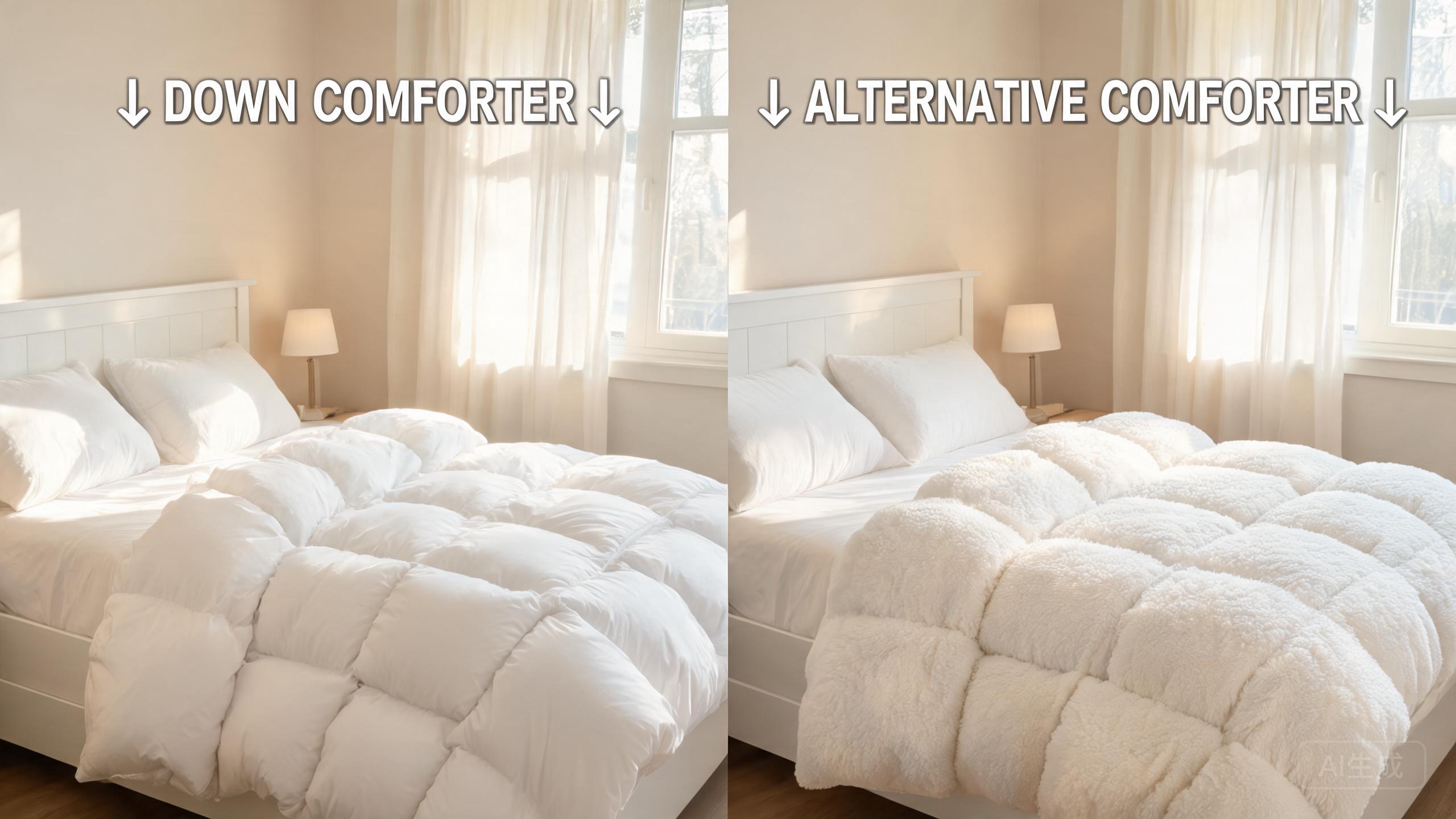
When it comes to comforters, there are two main options: down and down alternative. Both promise warmth and comfort, but they're very different in feel, price, and care.
I've slept with both types extensively (it's a tough job, but someone's gotta do it). Here's an honest comparison to help you decide which is right for you.
What Is Down?
Down is the soft, fluffy undercoating of geese and ducks. It's the stuff under the feathers that keeps birds warm. Down clusters trap air, which is what makes them such great insulators — light and fluffy, but very warm.
- Goose down: Higher quality, larger clusters, more expensive
- Duck down: Good quality, smaller clusters, more affordable
- Fill power: Measures quality (higher = fluffier, warmer, more expensive). 600-800 is good, 800+ is premium.
What Is Down Alternative?
Down alternative is usually made from synthetic fibers (polyester) that are designed to mimic the feel of down. Some use natural alternatives like bamboo or silk fibers, but most are polyester.
- Microfiber: The most common — fine polyester fibers that mimic down
- Gel fiber: Polyester with a gel coating for a silkier feel
- Bamboo/silk blends: Natural alternatives, but less common and more expensive
Comparison
Warmth
Winner: Down (by a little)
Down is a better insulator ounce for ounce. A down comforter will be lighter and fluffier than a down alternative comforter with the same warmth rating.
That said, a thick enough down alternative comforter can be just as warm — it'll just be heavier and less fluffy.
Edge: Down
Feel
Winner: Down
Nothing quite feels like high-quality down. It's fluffy, cloud-like, and has that "sinking into a cloud" feeling. Down alternative has gotten better, but it still feels a bit more synthetic and flat.
Budget down alternative can feel stiff or lumpy. Higher-end alternatives are much closer to the real thing, but still not quite there.
Edge: Down
Price
Winner: Down Alternative
This is where down alternative dominates. A decent down alternative comforter costs $50-$150. A comparable down comforter costs $200-$500+.
You can get a down alternative comforter for 1/3 to 1/5 the price of a down one. That's a big difference.
Edge: Down Alternative
Allergies
Winner: Down Alternative
Despite what you might have heard, most people aren't actually allergic to down — they're allergic to the dust mites that live in down. But if you do have down allergies or just want to be safe, down alternative is hypoallergenic.
That said, high-quality down that's been properly cleaned is actually pretty low-allergen. And down alternative can still harbor dust mites — you just have to wash it more easily.
Edge: Down Alternative (slight)
Durability
Winner: Down
A good down comforter can last 10-20 years with proper care (fluffing regularly, using a duvet cover, occasional professional cleaning). Down alternative comforters typically last 2-5 years before they flatten and lose their loft.
Over 20 years, the cost difference narrows — but you're still probably paying less total for down alternatives. You just have to replace them more often.
Edge: Down
Care
Winner: Down Alternative
Most down alternative comforters are machine-washable. Throw it in the washer, dry on low, done.
Down comforters are more high-maintenance. Most need professional dry cleaning, though some can be machine-washed on delicate. And you have to fluff them regularly to maintain their loft.
Edge: Down Alternative
Ethics / Vegan
Winner: Down Alternative
If you're vegan or concerned about animal welfare, down alternative is the clear choice. Down comes from birds, and while ethical down certifications exist, it's still an animal product.
Edge: Down Alternative
Who Should Get Down?
You should get a down comforter if:
- You want the ultimate in luxury and comfort
- You're willing to invest in something that will last 10+ years
- You prefer a light, fluffy feel over a heavy feel
- You don't mind professional cleaning or careful care
- Budget isn't your primary concern
My pick for down: Brooklinen Down Comforter (all-season) — great quality at a reasonable price.
Who Should Get Down Alternative?
You should get a down alternative comforter if:
- You're on a budget
- You want something machine-washable
- You're vegan or prefer synthetic materials
- You have severe allergies (or think you do)
- You need something for a guest room or kid's room
My pick for down alternative: Buffy Cloud Comforter — super soft, eucalyptus-based, and they let you try it for 7 nights.
Final Verdict
Down is better in terms of feel, warmth-to-weight ratio, and durability. If you can afford it and you're willing to take care of it, it's the upgrade worth making.
Down alternative is better for your wallet, your allergies, and your laundry routine. For most people, it's more than good enough — especially if you get a quality one.
Me? I sleep under a down comforter in winter (cozy!) and a down alternative in summer (lighter, washable). Best of both worlds.
At the end of the day, the best comforter is the one that keeps you warm and comfortable at a price you're happy with. Both options can do that.