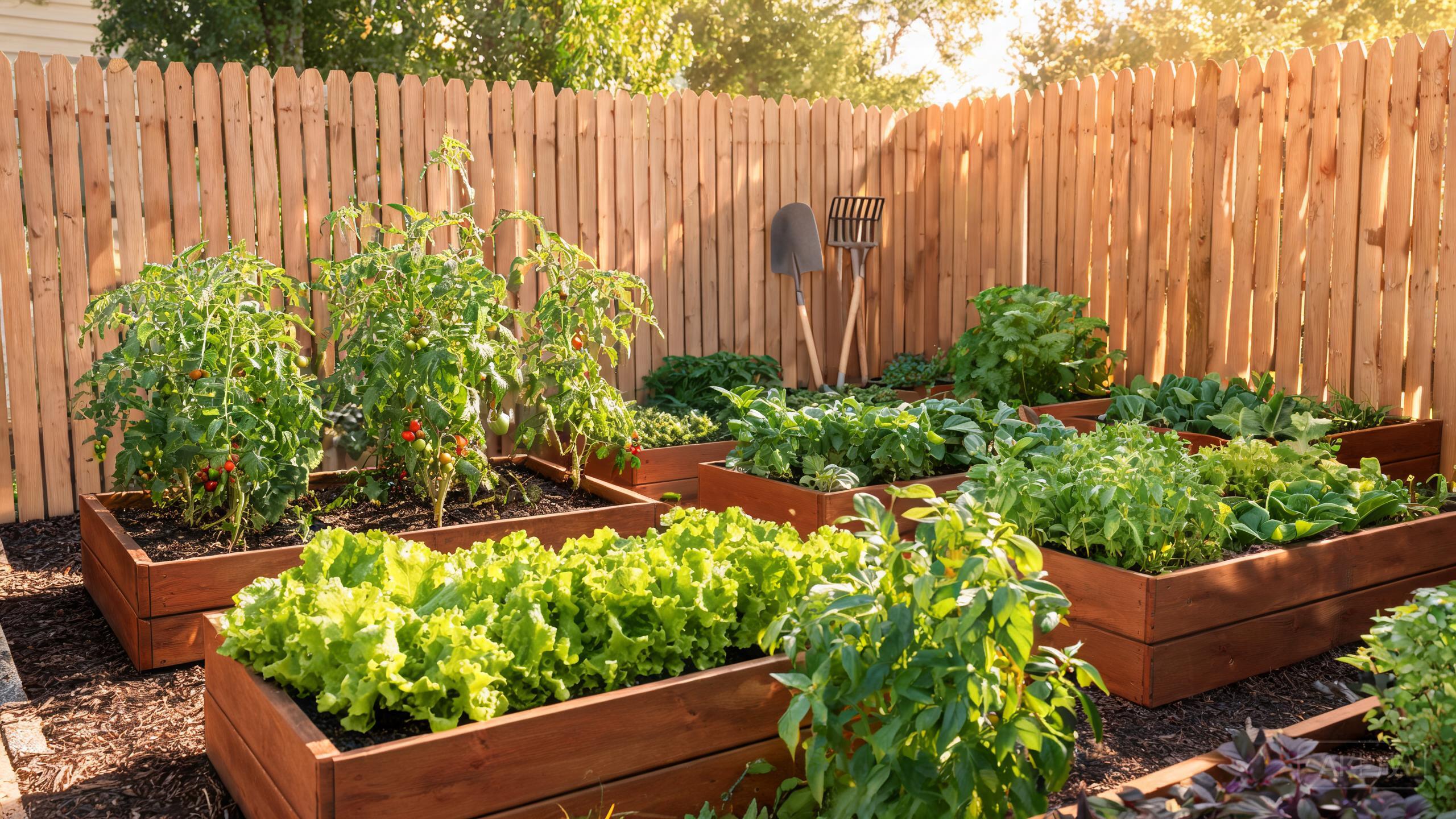
Raised garden beds solve nearly every problem with traditional in-ground vegetable gardening. They drain better, warm up earlier in spring, have loose friable soil that roots love, and they save your back from constant bending.
Why Raised Beds Work Better
When you build up soil in a contained bed, you control exactly what goes into it. The contained soil drains more efficiently than ground-level beds, which prevents root rot and lets you plant earlier in spring since the soil warms faster. The defined edges also prevent grass from creeping in and make weed control far simpler.
Best Raised Garden Bed Options
1. Greenes Fence Cedar Raised Garden Bed
Cedar is the best wood for outdoor planters — it resists rot naturally. This model uses dovetail joints that slide together without tools, and the cedar construction lasts 5 to 10 years.
2. Birdies Galvanized Steel Raised Bed
These corrugated steel beds are virtually indestructible. They last decades, look striking, and the steel walls absorb heat to warm soil faster in spring.
3. Gronomics Cedar Raised Bed
A premium cedar bed with a built-in trellis for climbing plants like tomatoes and cucumbers. The trellis saves space and the cedar construction is untreated and food-safe.
4. Giantex Fir Wood Planter Box
For patios and decks, this elevated planter box sits on legs, bringing the garden to waist height. Ideal for herbs, salad greens, and compact vegetables.
5. Vegepod Small Raised Garden Bed
A self-contained system with a built-in irrigation wicking bed, protective canopy, and modular design. The wicking system means you only water every 1 to 2 weeks.
DIY vs. Pre-Made Beds
Building your own raised bed from lumber is cheaper if you have basic carpentry skills. Untreated cedar or redwood 2x10 boards cost about $40 to $60 per 4x8 foot bed. Pre-made kits save time but cost 2 to 3 times more.
The ideal bed is 12 to 18 inches deep for most vegetables, no wider than 4 feet, and oriented north-south for even sun exposure.
Best Soil Mix for Raised Beds
The classic formula is one-third compost, one-third peat moss or coco coir, and one-third vermiculite or perlite. This mix is light, drains well, and retains moisture. Avoid using soil directly from your yard.
Frequently Asked Questions
How deep should a raised vegetable bed be?
12 inches is sufficient for most vegetables. Root crops like carrots need 12 to 18 inches. Tomatoes benefit from 18+ inches.
Should I line the bottom of my raised bed?
Line the bottom with hardware cloth to prevent burrowing pests, then add a layer of cardboard to suppress grass and weeds. Avoid plastic liners, which prevent drainage.